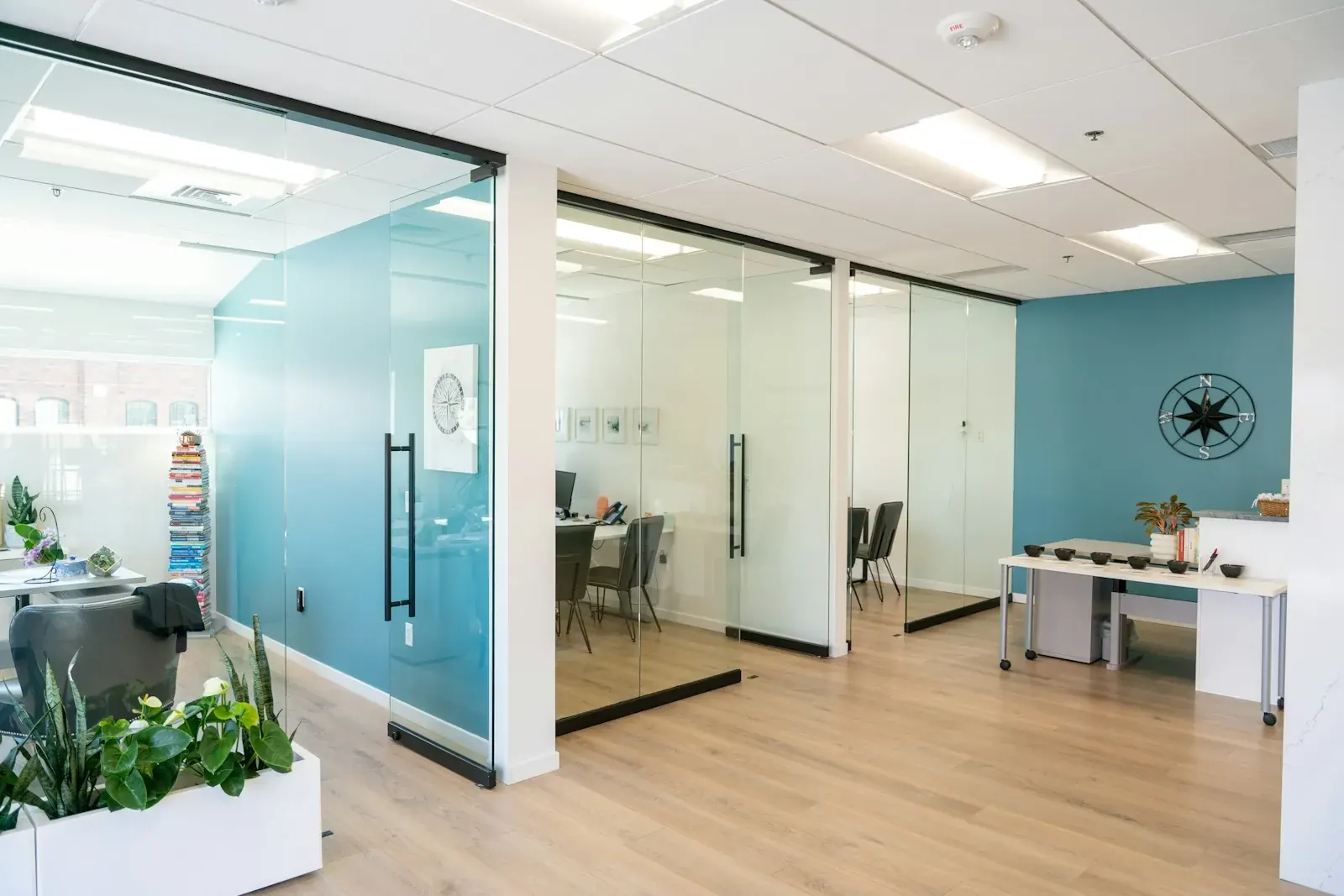
Office flooring options compared
The right office floor depends on three things: how much noise you need to absorb, how many chairs roll over it, and how easily it can be cleaned and repaired. Here is how the common options compare.

Office flooring types at a glance
| Floor | Noise | Rolling chairs | Cleaning | Repair | Best for |
|---|---|---|---|---|---|
| Carpet tiles | Absorbs sound well | Good with hard castors; may need mats in heavy use | Vacuum; spot clean | Replace single tiles | Open-plan work areas, meeting rooms |
| Broadloom carpet | Absorbs sound well | As carpet tiles | Vacuum; deep clean | Patch or replace a whole area | Private offices, quiet rooms |
| Luxury vinyl tile or plank (LVT) | Harder; some footfall noise | Good with soft castors | Damp mop | Replace planks | Kitchens, reception, corridors |
| Sheet vinyl | Harder | Good | Damp mop; few seams | Patch or re-lay | Kitchens, washrooms, labs |
| Rubber | Quieter than vinyl; slip resistant | Good | Damp mop | Replace tiles or re-lay | Entrances, gyms, busy routes |
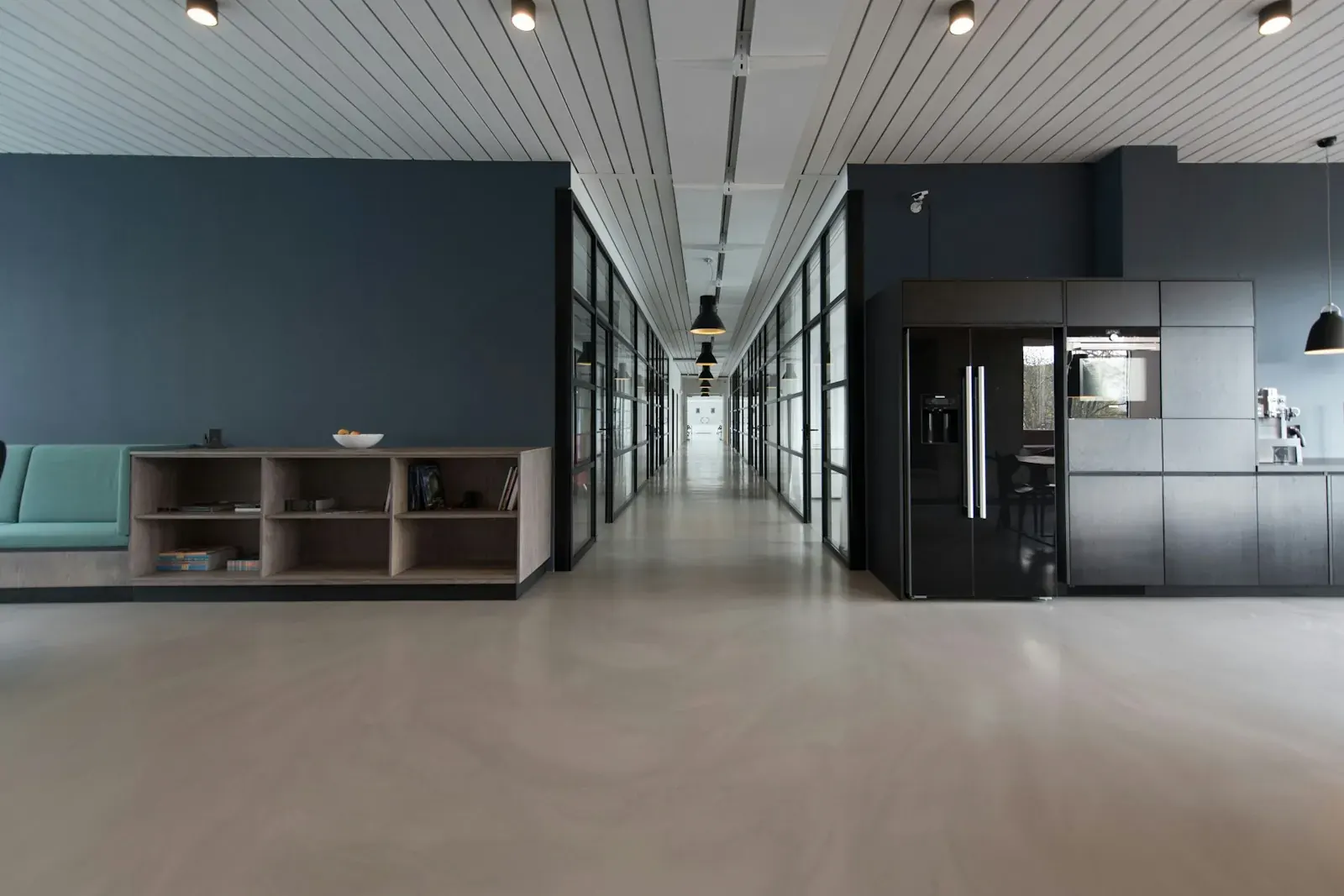
| Polished concrete | Loud; echoes | Very good with soft castors | Dust mop | Grind and reseal | Industrial-style offices, add rugs for sound |
| Engineered wood | Some footfall noise | Can scratch; use chair mats | Damp mop | Sand and refinish (if thick enough) | Executive offices, reception |
These are general traits of each material. Check the maker's rating for commercial use and the castor type it recommends.
Carpet tiles for an office floor
Carpet tiles are the most common choice for open office areas, and for good reasons:
- Quiet. Carpet absorbs footfall and voices better than hard floors.
- Easy to repair. You can lift and replace one stained or worn tile instead of the whole floor.
- Works with raised floors. Tiles lift to reach floor boxes and cables.
- Flexible patterns. You can mark walkways or zones with a different colour.
Common sizes are 24 x 24 in squares in the US, 50 x 50 cm squares in Europe, and long planks. Ask for a commercial use rating and a backing suited to office chairs.
Carpet tiles and office chairs
- Hard castors suit carpet; soft (rubber) castors suit hard floors.
- In heavy-use spots, such as a call centre or reception desk, add a clear chair mat to stop wear in one place.
- Choose a low, dense pile. Deep pile makes chairs hard to roll.
Carpet tiles for a home office
Carpet tiles work well in a home office too: you can lay them loose over a hard floor in a rental, lift them when you move, and replace one tile if coffee spills.
Office flooring ideas by zone
- Entrance: a recessed barrier mat, then rubber or LVT to catch dirt and water.
- Reception: LVT, wood or a hard floor with a large rug for comfort.
- Work areas: carpet tiles for sound control.
- Meeting rooms: carpet to absorb voices, so calls sound clearer.
- Kitchen and washrooms: sheet vinyl or LVT with sealed seams.
- Corridors: a hard-wearing carpet tile or LVT; mark the main route in a contrasting colour.
Old carpet: think before you throw it out
The US Environmental Protection Agency estimates that 3.4 million tons of carpets and rugs were thrown out in 2018. About 9.2% was recycled, 17.8% was burned for energy and 73% went to landfill. Some carpet tile makers run take-back schemes, so ask your supplier before you strip a floor. Our reuse guide covers what to do with old fittings.
Frequently asked questions
What is the best flooring for an office?
Carpet tiles are the most common choice for work areas because they absorb sound and are easy to repair. Use LVT or sheet vinyl in kitchens and rubber or a barrier mat at entrances.
Are carpet tiles good for office chairs?
Yes, with a low, dense pile and hard castors. Add a chair mat where one chair rolls all day.
What are the main office flooring types?
Carpet tiles, broadloom carpet, luxury vinyl tile (LVT), sheet vinyl, rubber, polished concrete and engineered wood.
Is vinyl or carpet better for an office?
Carpet is quieter; vinyl is easier to clean. Many offices use carpet in work areas and vinyl in kitchens and corridors.
Can I use carpet tiles in a home office?
Yes. They can be laid loose over a hard floor, lifted when you move, and replaced one at a time.